Fortune 100 client

2022-2024

Designing trust and actionability in AI-assisted decision systems.

Context

Internal decision-support platform used by engineers across several manufacturing sites, where delayed or incorrect decisions could have significant downstream impact.

Problem

Despite strong AI models, adoption was low. Users struggled to interpret outputs, prioritize what mattered, and act with confidence across fragmented tools.

Context

Internal decision-support platform used by engineers across several manufacturing sites, where delayed or incorrect decisions could have significant downstream impact.

Problem

Despite strong AI models, adoption was low. Users struggled to interpret outputs, prioritize what mattered, and act with confidence across fragmented tools.

Context

Internal decision-support platform used by engineers across several manufacturing sites, where delayed or incorrect decisions could have significant downstream impact.

Problem

Despite strong AI models, adoption was low. Users struggled to interpret outputs, prioritize what mattered, and act with confidence across fragmented tools.

My Role

Sole Product Designer, leading end-to-end design across research, strategy, and delivery in close partnership with product, engineering, and data science.

Internal decision-support platform used by engineers across several manufacturing sites, where delayed or incorrect decisions could have significant downstream impact.

Outcome

Improved trust, reduced cognitive burden, and clearer decision paths in high-stakes workflows, contributing to $200M in cost avoidance and scaled adoption across sites.

Despite strong AI models, adoption was low. Users struggled to interpret outputs, prioritize what mattered, and act with confidence across fragmented tools.

My Role

Internal decision-support platform used by engineers across several manufacturing sites, where delayed or incorrect decisions could have significant downstream impact.

Outcome

Despite strong AI models, adoption was low. Users struggled to interpret outputs, prioritize what mattered, and act with confidence across fragmented tools.

Problem area

Why adoption—not model accuracy—was the real problem

The AI model was working — it flagged anomalies and offered insights — but adoption was low. Engineers didn’t trust the output, didn’t know what to prioritize, and were stuck jumping between tools. It wasn’t an algorithm problem — it was a UX one. We needed to make the AI interpretable, actionable, and actually usable in a real manufacturing environment.

Opportunity 1

Turn early skepticism into trust by making AI predictions explainable, verifiable, and useful in real workflows

Opportunity 1

Turn early skepticism into trust by making AI predictions explainable, verifiable, and useful in real workflows

Opportunity 1

Turn early skepticism into trust by making AI predictions explainable, verifiable, and useful in real workflows

Opportunity 2

Consolidate fragmented tools into a single, purpose-built system to streamline investigations and improve team collaboration

Opportunity 2

Consolidate fragmented tools into a single, purpose-built system to streamline investigations and improve team collaboration

Opportunity 2

Consolidate fragmented tools into a single, purpose-built system to streamline investigations and improve team collaboration

Design goals

Design goals in a safety-critical context

Make AI understandable

Transform raw model output into clear, interpretable visuals that empower engineers to take informed action — even without ML expertise.

Make AI understandable

Transform raw model output into clear, interpretable visuals that empower engineers to take informed action — even without ML expertise.

Make AI understandable

Transform raw model output into clear, interpretable visuals that empower engineers to take informed action — even without ML expertise.

Close the feedback loop

Capture human feedback from engineers to improve model accuracy over time and build a continuous learning system.

Close the feedback loop

Capture human feedback from engineers to improve model accuracy over time and build a continuous learning system.

Close the feedback loop

Capture human feedback from engineers to improve model accuracy over time and build a continuous learning system.

Reduce manual effort

Streamline repetitive investigation tasks by consolidating tools, reducing clicks, and introducing automation for key workflows.

Reduce manual effort

Streamline repetitive investigation tasks by consolidating tools, reducing clicks, and introducing automation for key workflows.

Reduce manual effort

Streamline repetitive investigation tasks by consolidating tools, reducing clicks, and introducing automation for key workflows.

Build trust, drive adoption

Show tangible outcomes (like warranty matches and production impact) to build user confidence and integrate AI into real-world operations.

Build trust, drive adoption

Show tangible outcomes (like warranty matches and production impact) to build user confidence and integrate AI into real-world operations.

Build trust, drive adoption

Show tangible outcomes (like warranty matches and production impact) to build user confidence and integrate AI into real-world operations.

Design decision 01

Making AI output interpretable through feedback loops

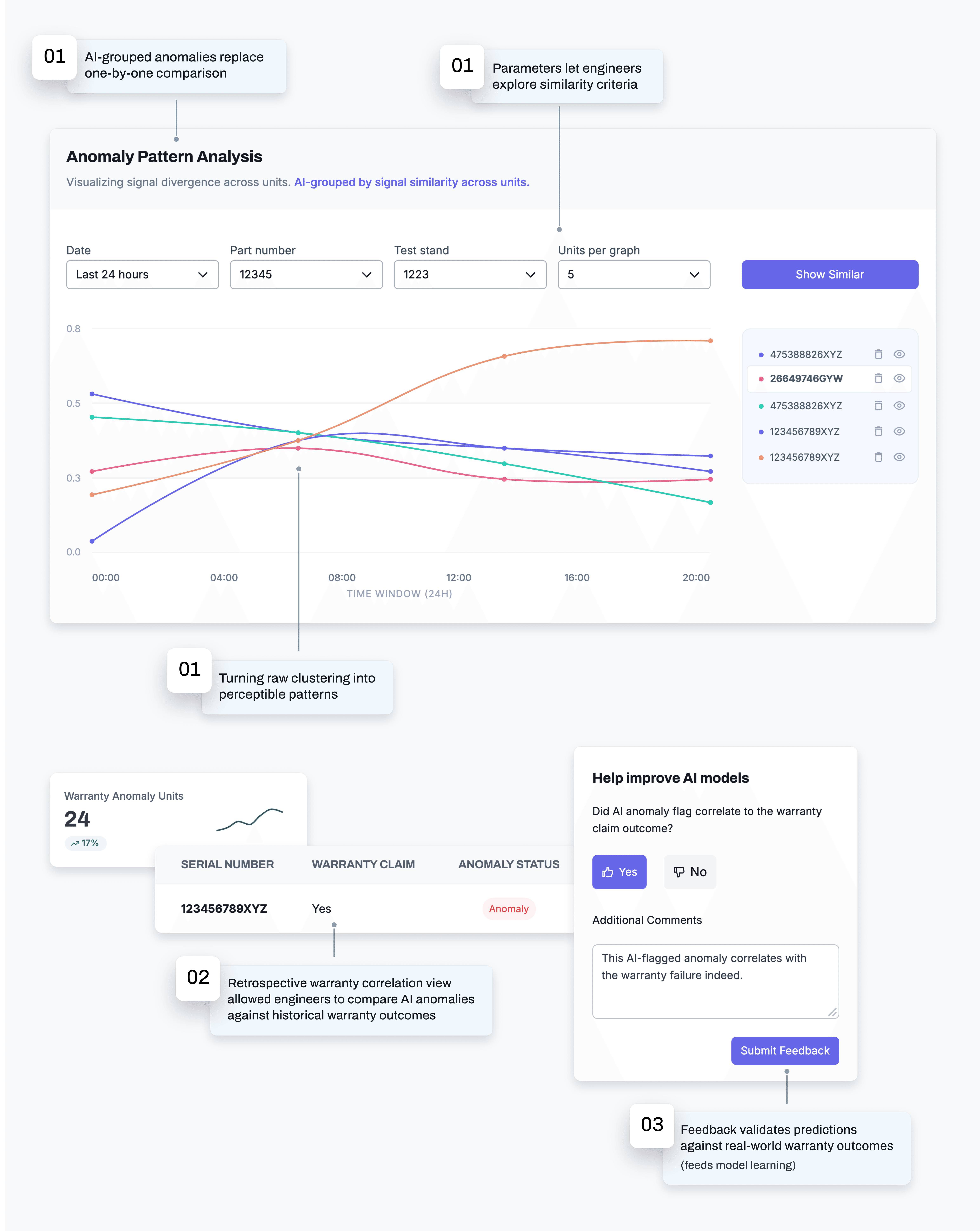
Engineers were overwhelmed by flagged anomalies but lacked tools to validate or understand them. I designed clustering by signal pattern to help them spot trends across transmissions and added in-app feedback mechanisms so they could confirm or reject anomalies without needing ML expertise. I also introduced warranty correlation views to show when AI predictions matched real-world failures. These changes reduced manual work, improved model training, and made AI behavior more transparent and trustworthy.
Key Design Highlights

1. Signal Pattern Clustering

Helped engineers quickly spot recurring anomalies across units instead of comparing one by one.

1. Signal Pattern Clustering

Helped engineers quickly spot recurring anomalies across units instead of comparing one by one.

1. Signal Pattern Clustering

Helped engineers quickly spot recurring anomalies across units instead of comparing one by one.

2. Inline Feedback Capture

Enabled users to mark anomalies as true or false to improve model learning — without leaving the UI.

2. Inline Feedback Capture

Enabled users to mark anomalies as true or false to improve model learning — without leaving the UI.

2. Inline Feedback Capture

Enabled users to mark anomalies as true or false to improve model learning — without leaving the UI.

3. Warranty Correlation View

Warranty Correlation View Brought visibility into how AI predictions aligned with real-world failures.

3. Warranty Correlation View

Warranty Correlation View Brought visibility into how AI predictions aligned with real-world failures.

3. Warranty Correlation View

Warranty Correlation View Brought visibility into how AI predictions aligned with real-world failures.

Design decision 02

Workflow redesign for enterprise efficiency

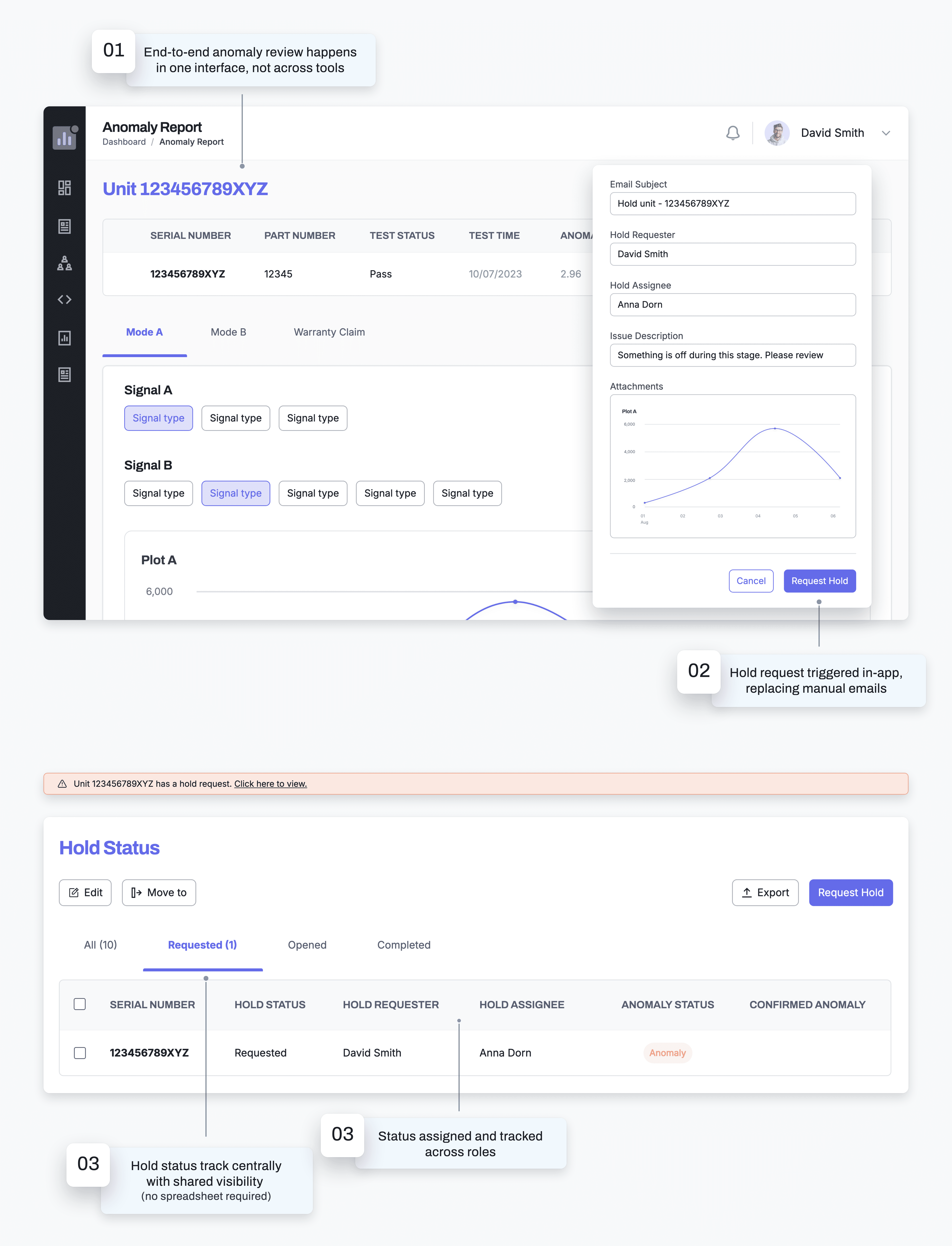
Before our redesign, anomaly investigations were spread across emails, spreadsheets, and side chats. I mapped the real workflows and redesigned the tool to support centralized reviews, hold requests, and status tracking — all in-app. This eliminated context switching, improved throughput, and enabled cross-team collaboration in a way that was visible, structured, and easy to follow.

Key Design Highlights

1. End-to-End Anomaly Review Flow

Brought anomaly investigation, review, and resolution into one seamless interface.

1. End-to-End Anomaly Review Flow

Brought anomaly investigation, review, and resolution into one seamless interface.

1. End-to-End Anomaly Review Flow

Brought anomaly investigation, review, and resolution into one seamless interface.

2. Built-in Hold Request System

Replaced email and spreadsheets with traceable “Hold” workflows directly in-app.

2. Built-in Hold Request System

Replaced email and spreadsheets with traceable “Hold” workflows directly in-app.

2. Built-in Hold Request System

Replaced email and spreadsheets with traceable “Hold” workflows directly in-app.

3. Status Tracking Across Roles

Made engineering team progress visible and auditable — no more guessing or pinging.

3. Status Tracking Across Roles

Made engineering team progress visible and auditable — no more guessing or pinging.

3. Status Tracking Across Roles

Made engineering team progress visible and auditable — no more guessing or pinging.

Design decision 03

Driving product adoption and building trust

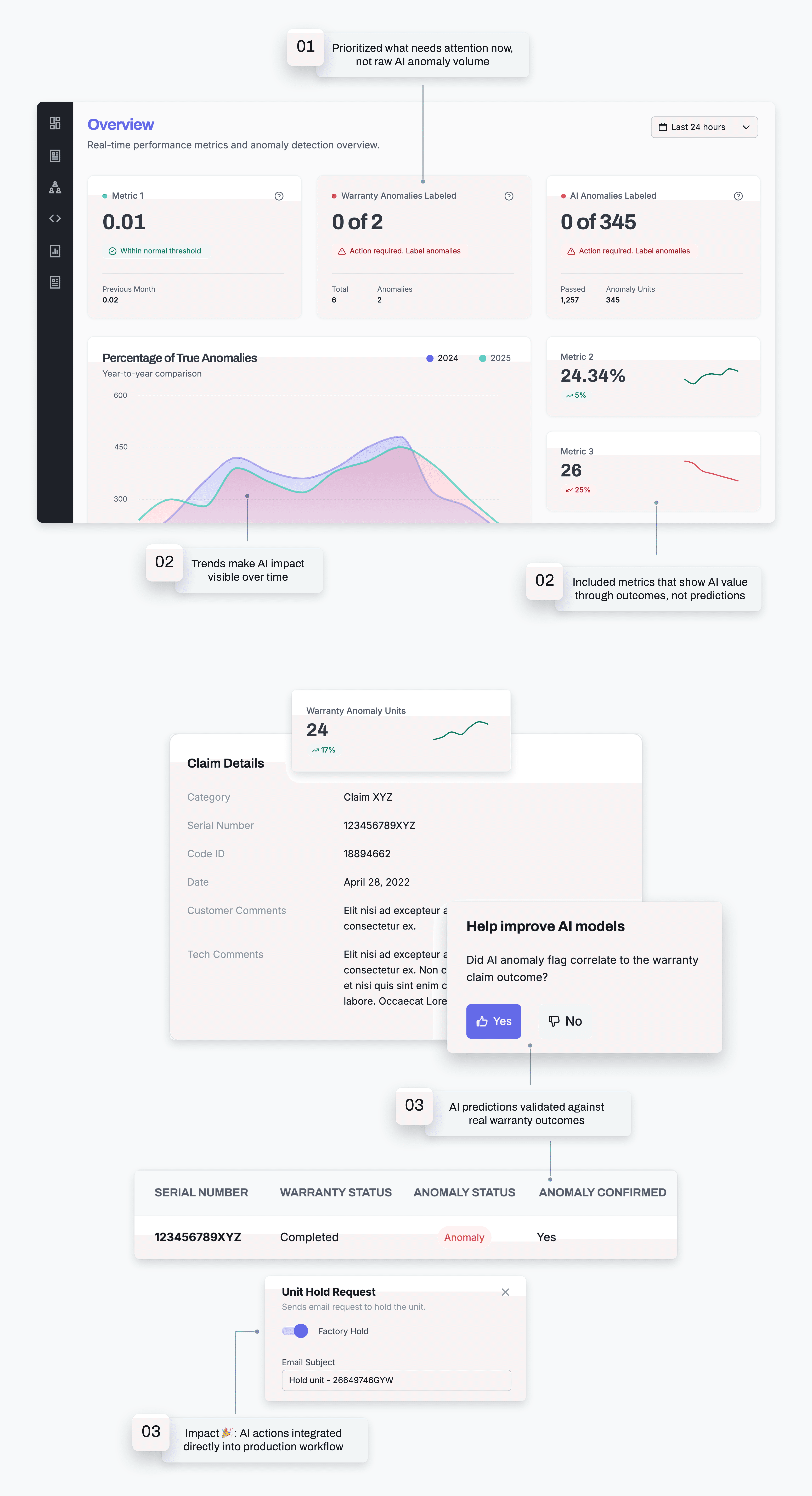
Adoption was low because engineers didn’t trust the AI or see its impact. I redesigned the homepage to prioritize urgent issues, added timelines and comparisons to support better judgment, and built feedback views showing where AI matched real failures. We also integrated the tool into the plant's hold system, connecting AI actions to real outcomes. As a result, usage increased, trust improved, and the tool expanded to 8 plants.
Key Design Highlights

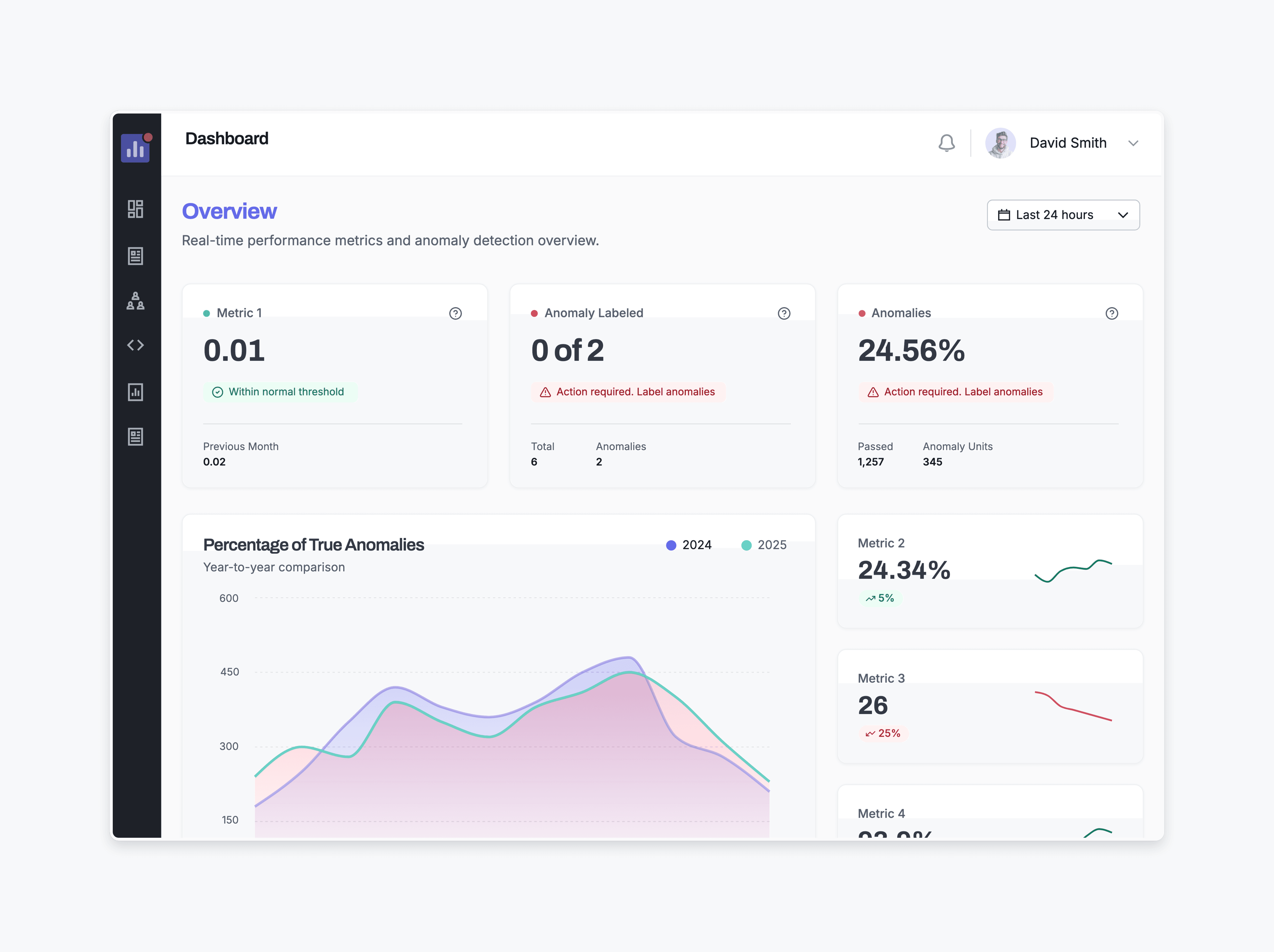
1. Prioritized Homepage

Helped users focus on the most critical anomalies with urgency-based views.

1. Prioritized Homepage

Helped users focus on the most critical anomalies with urgency-based views.

1. Prioritized Homepage

Helped users focus on the most critical anomalies with urgency-based views.

2. Timeline Comparisons

Allowed engineers to visually compare anomaly behavior across time and units.

2. Timeline Comparisons

Allowed engineers to visually compare anomaly behavior across time and units.

2. Timeline Comparisons

Allowed engineers to visually compare anomaly behavior across time and units.

3. Integrated Warranty Feedback

Reinforced trust by surfacing proven AI success cases aligned with real-world defects.

3. Integrated Warranty Feedback

Reinforced trust by surfacing proven AI success cases aligned with real-world defects.

3. Integrated Warranty Feedback

Reinforced trust by surfacing proven AI success cases aligned with real-world defects.

Retrospective

Even the best AI model fails without trust, clarity, and workflow fit.

Empowered businesses

Business owners gained control, tracking performance in minutes and deciding faster.

Empowered businesses

Business owners gained control, tracking performance in minutes and deciding faster.

Empowered businesses

Business owners gained control, tracking performance in minutes and deciding faster.

Increased retention

Dashboard became central, engagement rose, and support tickets fell significantly.

Increased retention

Dashboard became central, engagement rose, and support tickets fell significantly.

Increased retention

Dashboard became central, engagement rose, and support tickets fell significantly.

Increased efficiency

It cut design time from weeks to days, letting the team test, refine, and deliver faster.

Increased efficiency

It cut design time from weeks to days, letting the team test, refine, and deliver faster.

Increased efficiency

It cut design time from weeks to days, letting the team test, refine, and deliver faster.